

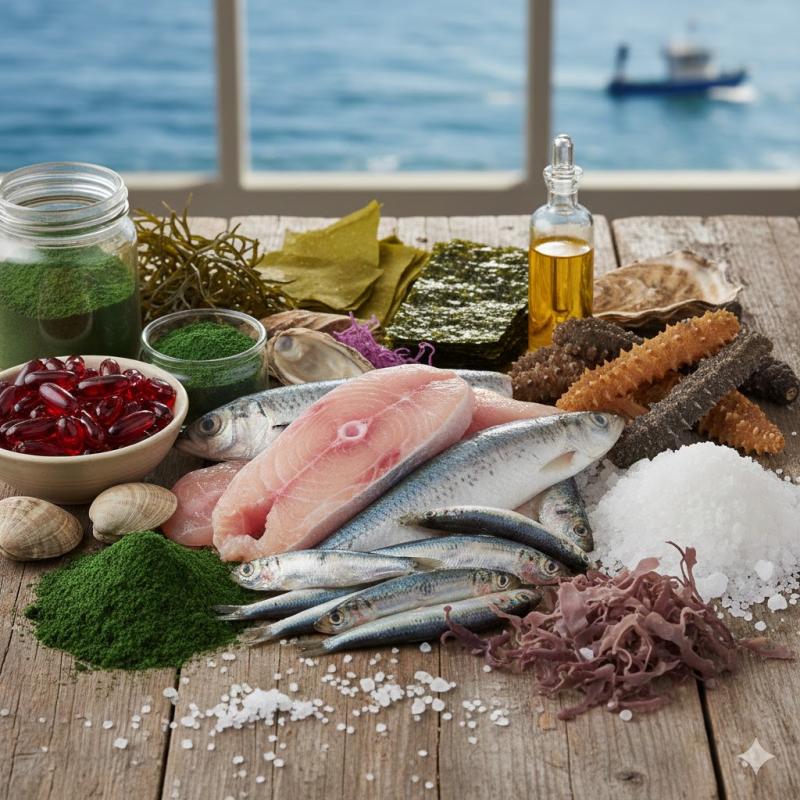
Aquaculture lives and dies on feed quality. Fish and shrimp grow faster, fight off disease better, and convert food more efficiently when their diet starts with strong marine inputs. That is why a marine ingredients manufacturer plays a central part in the modern fish farming chain, turning raw fish material into the protein and fats that drive growth.
Thailand sits in a strong position here. The country ranks among the world’s largest seafood processors, handling vast volumes of tuna and shrimp each year. That scale produces a steady flow of trimmings and offcuts, and a marine ingredients manufacturer can convert this material into fish meal, fish oil, and protein hydrolysates rather than waste.
The link between processing and aquaculture is direct and practical. A marine ingredients manufacturer in Thailand can source fish material close to where it is caught, keeping inputs fresh and traceable. The result is feed that supports better growth rates and lower costs for farmers across the region.
Fish Meal and Fish Oil
Fish meal remains the gold standard protein for aquafeed. It carries a balanced amino acid profile that matches the needs of carnivorous species like shrimp and sea bass. High protein content and strong digestibility make it hard to replace with plant sources alone.
Fish oil supplies the long-chain omega-3 fatty acids, mainly EPA and DHA, that farmed fish need for growth and health. These fats support cell function, immune response, and the omega-3 content in the final harvested fish, which matters to end buyers.
Protein Hydrolysates
Hydrolysates are fish proteins broken into smaller peptides through controlled processing. These small molecules digest quickly and act as feed attractants, which encourages young fish and shrimp to eat.
For larval and early-stage animals with immature digestive systems, hydrolysates offer protein in a form the body absorbs with ease. Even a small inclusion rate can lift survival and early growth.
Feed Conversion and Digestibility
Feed conversion ratio, or FCR, measures how much feed it takes to produce a unit of weight gain. Lower numbers mean less feed and lower cost per kilogram of fish.
Marine ingredients improve FCR because the body absorbs them efficiently. High digestibility means more nutrients reach the animal and less passes out as waste. This also reduces the nutrient load on pond and tank water, which supports cleaner farming.
Sustainability of Seafood Byproducts
Using trimmings and offcuts puts material to work that would otherwise be discarded. This reduces waste across the seafood sector and eases pressure on whole-fish catches reserved for human food.
Byproduct-based ingredients give farmers a feed input with a clearer environmental story, which carries weight in export markets with strict sourcing rules.
Sourcing Tips for Buyers
- Confirm protein and fat figures. Ask for lab results on protein content, EPA, and DHA levels.
- Check freshness. Request data on oxidation and total volatile nitrogen.
- Verify traceability. Reliable producers track material back to the catch and plant.
- Review certifications. Look for HACCP, GMP, and recognized sustainability standards.
- Test before scaling. Run a trial batch to confirm growth and stability.
Strong marine ingredients build strong feed. Confirm the numbers, check the source, and partner with transparent suppliers.