

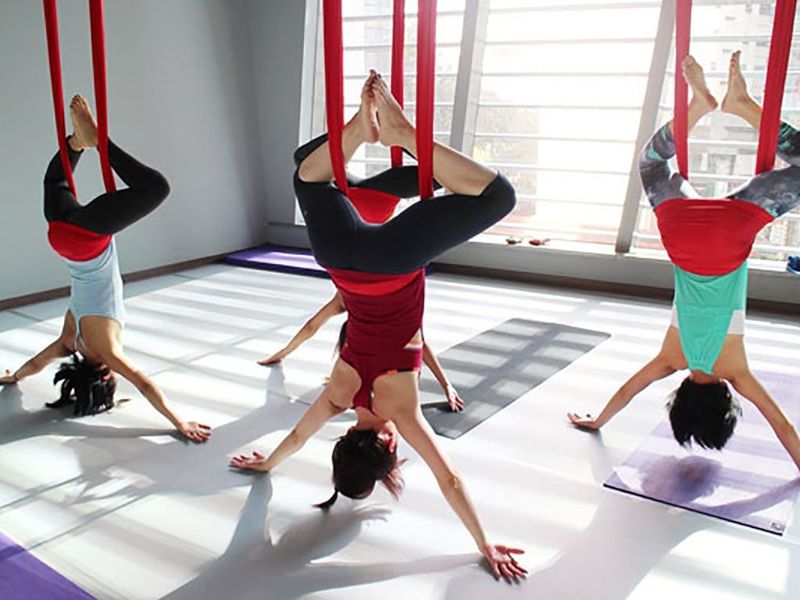
Among all the yoga and Pilates formats that have gained traction in Singapore’s wellness market, aerial yoga is unique in the capital and operational demands its physical infrastructure creates. The suspended hammock system that defines aerial yoga is not simply a prop that can be added to an existing studio without significant structural preparation. It is a load-bearing installation that requires purpose-built or substantially modified facilities, professional engineering assessment, and ongoing maintenance standards that add meaningful cost dimensions to what is already a premium service category.
Understanding the infrastructure economics of Aerial yoga studios provides insight into why this format occupies the specific market positioning it does in Singapore, why pricing reflects genuine cost rather than simply market positioning, and what financial considerations operators and investors need to account for when evaluating this segment of the wellness market.
The Structural Requirements and Their Cost Implications
The load-bearing requirements of aerial yoga hardware are significantly more demanding than those of standard commercial fit-out. Each aerial yoga point must support the full weight of a practitioner in dynamic movement, with the safety factors required by commercial occupancy standards typically specifying load ratings several times the practitioner’s static body weight to account for the shock loading of dynamic movements.
In Singapore’s commercial building stock, the structural capacity to support aerial yoga hardware is not universally available. Older shophouses and many commercial buildings have floor-to-ceiling heights and structural systems that are marginal or inadequate for the installation of compliant aerial yoga rigging without significant structural modification. The cost of engineering assessment, structural modification where required, and the installation of compliant rigging hardware is a significant capital expenditure that distinguishes aerial yoga studio fit-out from standard yoga studio fit-out.
Professional rigging hardware for aerial yoga, including the ceiling mounts, adjustable daisy chains, swivel attachments, and hammock fabric, must meet specific load standards and be inspected and maintained to those standards on an ongoing basis. The hardware cost per aerial yoga point, including installation by qualified riggers, typically ranges from 800 to 2,500 Singapore dollars depending on the structural system and hardware specifications. A studio equipping twelve aerial yoga points is therefore spending 10,000 to 30,000 Singapore dollars in rigging hardware alone before considering any other fit-out costs.
Ceiling Height as a Non-Negotiable Constraint
The minimum ceiling height for aerial yoga is approximately four metres, with five metres or more preferable for a full range of inverted and dynamic positions. This requirement immediately excludes the majority of Singapore’s shophouse ground floors, where ceiling heights are typically between three and three and a half metres, and a significant proportion of commercial upper floor spaces in older buildings.
The ceiling height constraint concentrates aerial yoga studios in a subset of Singapore’s commercial property stock that commands premium rents, specifically the newer commercial and mixed-use developments with higher floor-to-floor heights, certain conserved shophouse upper floors and attic conversions, and purpose-built wellness facilities where ceiling heights have been designed to accommodate specialist formats.
The rent premium associated with this spatial requirement adds meaningfully to the operational cost structure of aerial yoga studios compared to conventional yoga studios that can occupy a wider range of commercial spaces. A studio paying a 20 to 30 percent rent premium for the ceiling height its format requires must price its sessions accordingly to maintain viable unit economics.
Hammock Lifecycle and Replacement Costs
The aerial yoga hammocks themselves represent a recurring capital cost that standard yoga equipment does not involve. Hammock fabric has a finite lifecycle determined by the frequency of use, the loads applied, and the UV exposure and cleaning protocols to which it is subjected. Professional aerial yoga studios typically replace their hammocks on schedules ranging from six months to two years depending on usage intensity, with each hammock replacement costing between 80 and 250 Singapore dollars per unit.
A twelve-point studio replacing its hammocks annually is spending 1,000 to 3,000 Singapore dollars per year in hammock replacement alone. This is not a major operating cost item individually, but it illustrates the pattern of ongoing capital expenditure that aerial yoga studios carry beyond the initial fit-out investment.
Cleaning and hygiene management of hammocks is another operational cost dimension without parallel in mat-based yoga formats. Hammocks that are in close contact with practitioners’ skin and clothing across multiple sessions require regular washing to maintain hygiene standards. Commercial-grade laundering of aerial yoga hammocks requires either on-site laundry facilities with sufficient capacity, which adds equipment and space costs, or outsourced laundering at commercial rates.
Pricing Strategy and Market Positioning
The infrastructure cost structure of aerial yoga studios in Singapore translates directly into their pricing strategy. Aerial yoga sessions at established Singapore studios are typically priced at 30 to 60 percent premium over equivalent duration classes in standard yoga formats, and this premium is justified by genuine cost differences rather than simply by novelty or exclusivity positioning.
The premium pricing has created a specific market positioning for aerial yoga in Singapore’s wellness landscape: it is accessible to the middle and upper segments of the wellness consumer market but not broadly accessible across income levels. This positioning shapes both the community character of aerial yoga studios and the marketing strategies that serve them most effectively.
The experiential dimension of aerial yoga is a significant marketing asset that justifies the premium positioning beyond the cost-based rationale. The novelty, the playfulness, and the distinctive physical experience of suspended practice create word-of-mouth and social media content generation that reduces the marketing cost burden compared to less photogenic formats.
Studios like Yoga Edition that have invested in the genuine infrastructure quality and safety standards that aerial yoga requires are operating from a position of authentic quality rather than nominal differentiation. In a format where the integrity of the rigging and hardware is literally a matter of practitioner safety, this investment reflects not just good business judgement but the fundamental responsibility that aerial yoga operators carry toward their communities.