

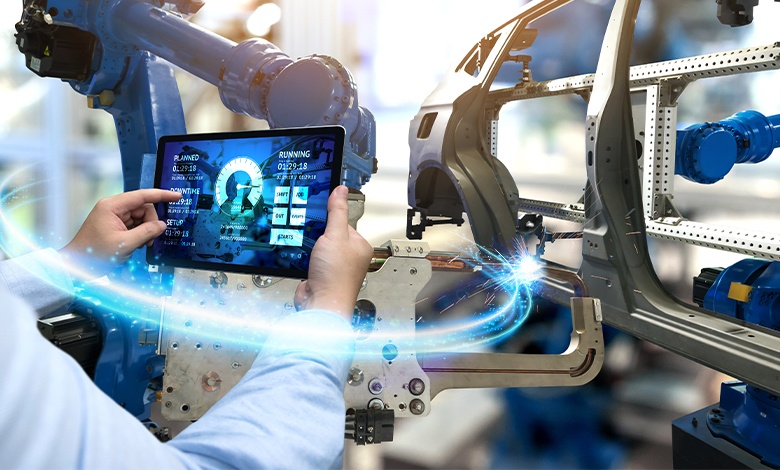
Industrial environments are under constant pressure to operate faster, safer, and more efficiently. As machines generate massive volumes of data every second, sending everything to centralized cloud systems has become impractical. Edge computing addresses this challenge by processing data closer to where it is created—on the factory floor, inside machines, or at local control centers. This shift is reshaping how industrial operations run, scale, and compete.
What Edge Computing Means for Industry
Edge computing refers to localized data processing that happens near industrial assets instead of relying solely on distant data centers. In manufacturing plants, energy grids, and logistics hubs, edge devices analyze sensor data in real time, enabling immediate responses without cloud-related delays.
Unlike traditional cloud-first models, edge computing prioritizes speed, autonomy, and reliability, which are essential in mission-critical industrial settings.
Why Traditional Cloud Models Fall Short in Industrial Settings
Cloud computing remains valuable, but it introduces limitations in industrial use cases where milliseconds matter.
Common challenges include:
- Latency delays that slow down automated decision-making
- Bandwidth costs from transmitting high-frequency sensor data
- Operational risk during network outages
- Compliance issues when sensitive data leaves local facilities
Edge computing reduces dependency on constant connectivity while preserving cloud integration for long-term analytics and storage.
Real-Time Decision-Making on the Factory Floor
One of the most significant impacts of edge computing is its ability to enable real-time operational intelligence.
By analyzing data at the source, industrial systems can:
- Detect equipment anomalies instantly
- Trigger automated safety responses
- Adjust production parameters on the fly
- Reduce downtime caused by delayed alerts
For example, a vibration sensor on a motor can signal wear patterns immediately, allowing maintenance teams to intervene before failure occurs.
Smarter Predictive Maintenance
Predictive maintenance has evolved with edge computing. Instead of waiting for data to be sent and processed remotely, edge systems evaluate machine health continuously.
Key benefits include:
- Early fault detection using local machine-learning models
- Lower maintenance costs through condition-based servicing
- Extended asset lifespan due to timely interventions
- Reduced unplanned outages
This localized intelligence makes maintenance strategies more proactive and precise.
Enhancing Industrial Automation and Robotics
Modern industrial robots rely on low-latency feedback loops to perform safely and accurately. Edge computing supports this requirement by processing sensor inputs and control commands in real time.
As a result:
- Robots respond faster to environmental changes
- Collaborative robots operate more safely alongside humans
- Automated lines adapt instantly to production variations
Edge computing becomes the backbone of next-generation automation systems.
Improving Data Security and Compliance
Industrial data often contains sensitive operational and intellectual property information. Edge computing helps keep critical data within local networks, reducing exposure to external threats.
Security advantages include:
- Minimal data transmission over public networks
- Faster detection of suspicious activity
- Easier compliance with regional data regulations
- Greater control over access policies
By limiting what data leaves the facility, organizations reduce both risk and regulatory complexity.
Supporting Remote and Harsh Environments
Industries such as mining, oil and gas, and utilities operate in locations with unreliable connectivity. Edge computing ensures continuity even when network access is limited or unavailable.
Edge-enabled systems can:
- Continue operating autonomously during outages
- Sync data once connectivity is restored
- Maintain safety monitoring without cloud dependence
This resilience is critical for operations in extreme or remote conditions.
Edge and Cloud: A Complementary Model
Edge computing does not replace the cloud—it enhances it. In modern industrial architectures, edge handles immediate processing while the cloud supports:
- Historical trend analysis
- Cross-site performance benchmarking
- Advanced AI model training
- Enterprise-level reporting
Together, they create a balanced and scalable digital infrastructure.
The Competitive Advantage of Edge-Driven Operations
Organizations adopting edge computing gain a measurable edge in productivity and responsiveness. Faster insights lead to better decisions, while reduced downtime and energy efficiency directly impact profitability.
As industrial systems become more autonomous and data-driven, edge computing is no longer optional—it is a strategic necessity.
FAQs
1. How is edge computing different from traditional industrial control systems?
Edge computing adds advanced analytics and AI capabilities on top of existing control systems, enabling smarter and more adaptive decisions.
2. Can edge computing work without internet connectivity?
Yes, edge systems can operate independently and synchronize data once connectivity is restored.
3. Is edge computing suitable for small and mid-sized manufacturers?
Absolutely. Scalable edge solutions allow smaller facilities to start with targeted use cases and expand over time.
4. What types of hardware are used in industrial edge computing?
Common hardware includes industrial gateways, ruggedized servers, embedded controllers, and smart sensors.
5. How does edge computing support sustainability goals?
By optimizing energy usage, reducing waste, and preventing equipment failure, edge computing helps lower environmental impact.
6. Does edge computing require advanced AI expertise to implement?
Not necessarily. Many platforms offer pre-built analytics and models tailored for industrial applications.
7. What industries benefit most from edge computing today?
Manufacturing, energy, transportation, logistics, and utilities are among the fastest adopters due to their real-time operational demands.