

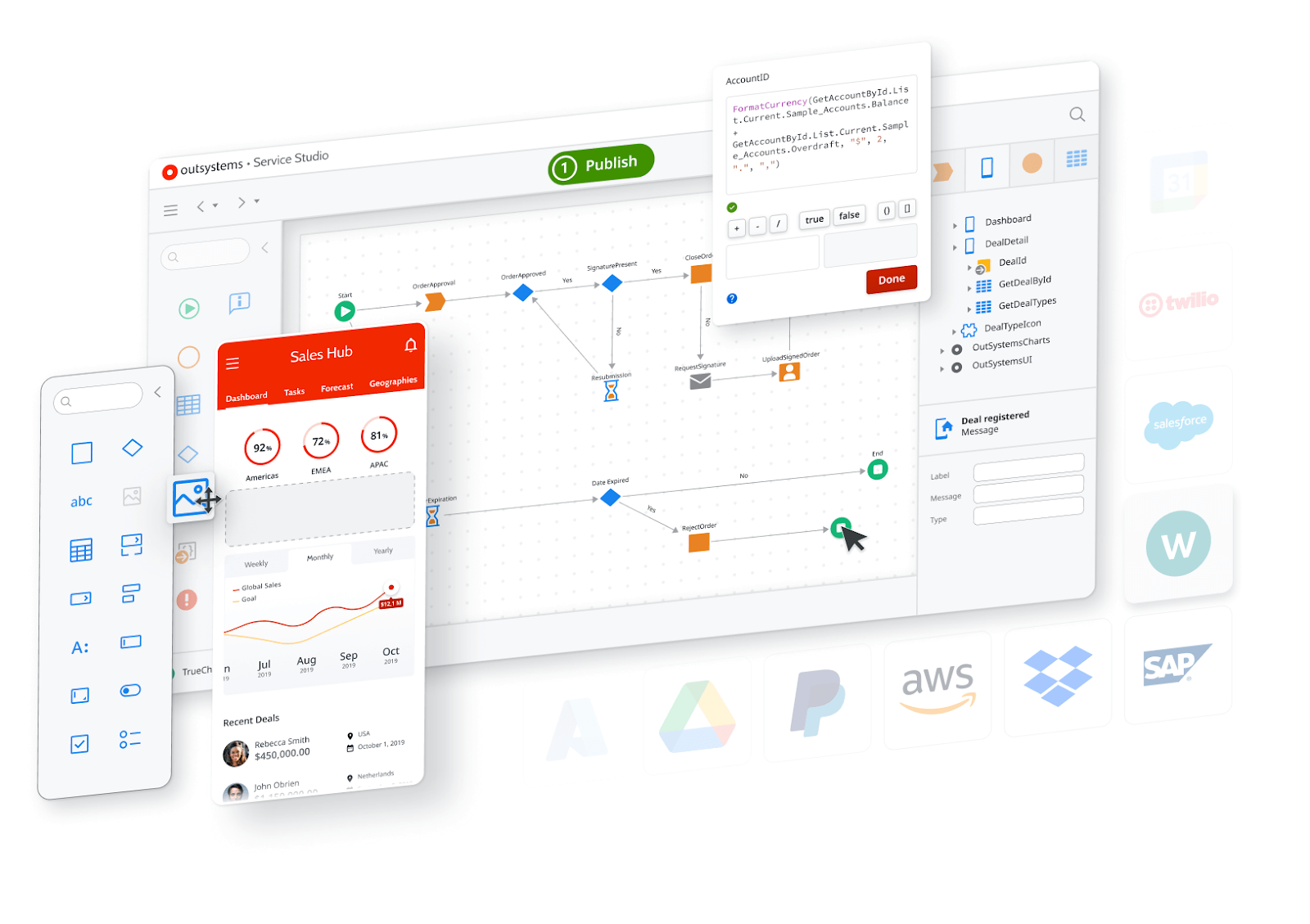
Low-code platforms are no longer a niche experiment. They have become a strategic shift in how software is built, deployed, and maintained. By abstracting complex coding tasks into visual workflows and reusable components, low-code development is redefining team structures, responsibilities, and productivity across industries.
As businesses face mounting pressure to deliver digital solutions faster, development teams are embracing low-code as a practical response to talent shortages, rising complexity, and constant demand for innovation.
Understanding Low-Code Development
Low-code platforms enable application creation using visual modeling, drag-and-drop components, and minimal hand-coding. Instead of writing thousands of lines of code, developers assemble applications through configuration and logic flows.
This approach does not eliminate traditional coding. Instead, it reduces repetitive work while allowing custom code where deeper control or performance is required.
Key Characteristics of Low-Code Platforms
- Visual application builders
- Pre-built templates and connectors
- Reusable logic components
- Built-in testing and deployment tools
- Integration with existing systems and APIs
The Traditional Development Bottleneck
Conventional software development teams often struggle with:
- Long development cycles
- Overloaded senior engineers
- Growing backlogs of internal requests
- Communication gaps between business and IT
- Difficulty scaling development capacity
Low-code platforms address these challenges by redistributing work more efficiently across teams.
How Low-Code Is Reshaping Development Teams
1. Expanding Who Can Build Software
Low-code platforms empower citizen developers—business analysts, operations staff, and domain experts—to create functional applications without deep programming knowledge.
This shift allows professional developers to focus on:
- Core architecture
- Security and governance
- Performance optimization
- Complex integrations
The result is a more balanced and scalable team structure.
2. Faster Delivery Without Sacrificing Quality
Visual development accelerates prototyping and iteration. Teams can move from idea to working application in days rather than months.
Benefits include:
- Rapid feedback loops
- Early validation with stakeholders
- Reduced rework and misalignment
- Continuous improvement instead of large releases
Speed becomes a competitive advantage, not a risk.
3. Improved Collaboration Between Business and IT
Low-code tools act as a shared language between technical and non-technical team members. Business users can directly participate in solution design instead of translating requirements through multiple layers.
This collaboration leads to:
- Clearer requirements
- Fewer misunderstandings
- Higher adoption rates
- Applications that better reflect real workflows
4. Redefining the Role of Professional Developers
Rather than replacing developers, low-code elevates their role. Engineers increasingly act as platform architects, mentors, and quality gatekeepers.
Their responsibilities evolve to include:
- Designing reusable components
- Enforcing standards and best practices
- Managing integrations and data models
- Supporting citizen developers
This shift reduces burnout and increases strategic impact.
5. Better Resource Utilization and Cost Efficiency
Low-code platforms reduce development costs by minimizing manual coding and shortening delivery timelines.
Organizations benefit from:
- Lower maintenance overhead
- Reduced dependency on scarce skills
- Faster return on investment
- Easier scalability across departments
Smaller teams can now deliver enterprise-grade solutions.
Governance and Control in Low-Code Environments
One common concern is loss of control. Modern low-code platforms address this through built-in governance frameworks.
Key governance features include:
- Role-based access controls
- Version management and auditing
- Centralized deployment pipelines
- Security and compliance enforcement
When implemented correctly, low-code can be more controlled than traditional development, not less.
Use Cases Driving Low-Code Adoption
Low-code platforms are particularly effective for:
- Internal business process automation
- Customer portals and dashboards
- Workflow and approval systems
- Data-driven applications
- Rapid MVP and proof-of-concept development
These use cases free up development teams to focus on high-complexity, high-impact projects.
Challenges Teams Should Be Aware Of
Despite its advantages, low-code is not a universal solution.
Potential challenges include:
- Platform lock-in risks
- Performance limitations for highly complex systems
- Need for clear governance models
- Training and change management requirements
Successful teams treat low-code as part of a broader development strategy, not a complete replacement.
The Future of Software Development Teams
Low-code platforms are accelerating a transition toward hybrid development teams where technical experts and business users collaborate seamlessly.
This model supports:
- Continuous innovation
- Faster digital transformation
- More resilient development pipelines
- Better alignment between technology and business goals
As low-code tools mature, they will continue to redefine what it means to be a software development team.
Frequently Asked Questions (FAQs)
1. Are low-code platforms suitable for enterprise-scale applications?
Yes, many low-code platforms support enterprise-grade security, scalability, and integration when combined with proper governance.
2. Do low-code tools replace traditional developers?
No, they shift developer focus toward architecture, customization, and oversight rather than repetitive coding tasks.
3. How do low-code platforms impact software maintenance?
They simplify maintenance through centralized updates, reusable components, and visual debugging tools.
4. Can low-code applications integrate with existing systems?
Most platforms provide built-in connectors and APIs for seamless integration with legacy and cloud systems.
5. What skills do developers need in a low-code environment?
System design, integration knowledge, security awareness, and mentoring skills become more important than syntax expertise.
6. Is low-code development secure?
Security depends on implementation. With proper access controls and governance, low-code platforms can meet strict security standards.
7. How should organizations start adopting low-code?
Begin with non-critical internal applications, establish governance rules early, and gradually expand usage as teams gain experience.